

The Ultimate SEO Guide for Saudi Arabia 2026: Your Roadmap to the Top
Quick Summary: Search Engine Optimization (SEO) is the process of structuring your website's architecture and content to dominate organic Google search results. In the Saudi market, SEO represents the marketing channel with the highest Return on Investment (ROI),
as over 80% of consumers rely on Google searches before making purchasing decisions, whether for B2B services or B2C e-commerce.
Why is 2026 a Turning Point for SEO in Saudi Arabia?
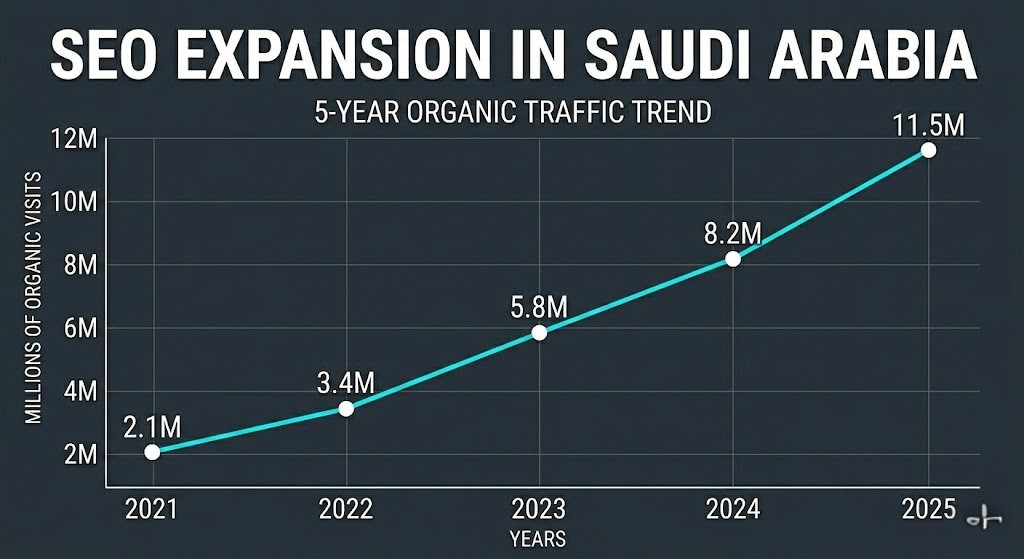
The SEO landscape in the Saudi market no longer relies on keyword stuffing and random link building. We are witnessing radical shifts as search engines increasingly depend on Artificial Intelligence to understand content context and answer users directly.
Concurrently, competition in the e-commerce sector, specifically on local platforms like Salla and Zid, has reached record highs.
Companies that continue applying traditional strategies are losing traffic and sales daily. In this guide, we provide a technical, actionable roadmap based on real data to ensure you build digital assets that top the search results and generate actual sales.
How to Use This SEO Roadmap?
This guide is designed to be your comprehensive reference. You can read it sequentially to build your site's strategy from scratch, or jump straight to the technical sections to fix indexing issues or boost sales on your current website.
Section 1: SEO Fundamentals in the GCC Market
Quick Summary: Google's crawlers scan your web pages, process Arabic texts to understand their semantic context using Natural Language Processing (NLP) algorithms, and finally index them to rank based on content quality and alignment with the user's search intent.
1. Understanding Search Intent for the Saudi User
The most common mistake in Arabic SEO is the literal translation of search intent. The Saudi user has a distinct search pattern that blends formal Arabic (Fusha) with local colloquial terms (White Dialect). To rank at the top, you must understand the real motive behind every search query and determine whether the user intends to buy or learn.
Practical Example: The keyword "sports shoes" reflects a general informational intent. Conversely, a phrase like "I want to buy running sports shoes in Riyadh" shows a confirmed purchasing intent from a user ready to checkout.
The Right Strategy: Google's engine can semantically link local dialects with formal Arabic. Your role as a specialist is to build content that serves the actual search intent, incorporating the terms your real customers use into your headings and FAQs.
2. How to Identify Profitable "Money Keywords"
Massive traffic is worthless if it does not convert into sales. Many websites rank for terms with huge search volumes but zero conversion rates. To select keywords that deliver real ROI in Saudi Arabia, follow these criteria:
Target Pain Points: Focus on the precise problems your customer faces. Instead of targeting a broad term like "digital marketing," target "best company to increase e-commerce sales in Riyadh." The search volume is lower, but the intent to hire is significantly higher.
Comparisons and Alternatives: Target keywords users search for during the decision-making phase, such as "Shopify alternative in Saudi Arabia" or "Salla vs. Zid comparison."
Local Modifiers: The Saudi market is geographically vast. Including city names like Riyadh, Jeddah, and Dammam multiplies your chances of appearing in local search results, which boast exceptional conversion rates.
3. Keyword Research Tools Tailored for Arabic Content
Global SEO tools like Ahrefs or Semrush are essential, but for Arabic content, their data can sometimes be delayed or partially inaccurate. To build an accurate keyword database for the Saudi market, utilize these sources:
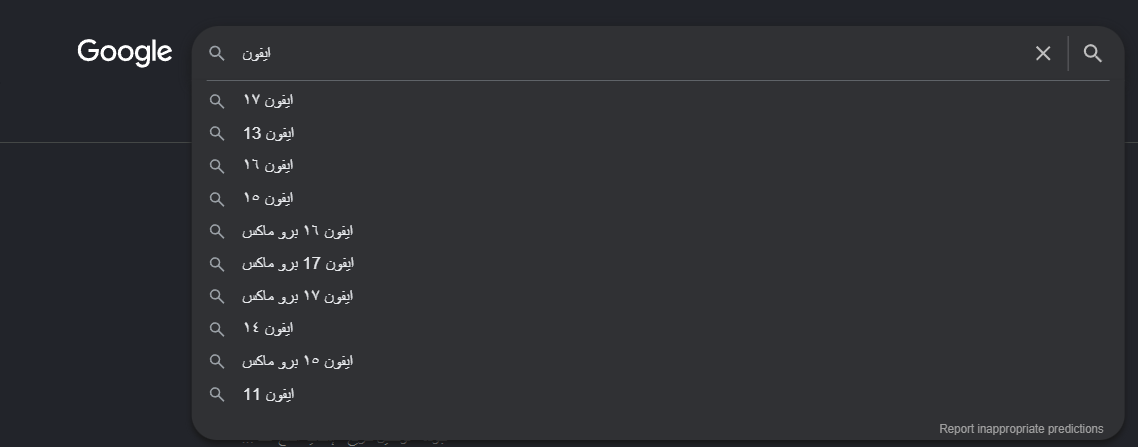
Google Autocomplete: Use Google search in incognito mode with a Saudi VPN to discover the exact phrases users type daily.
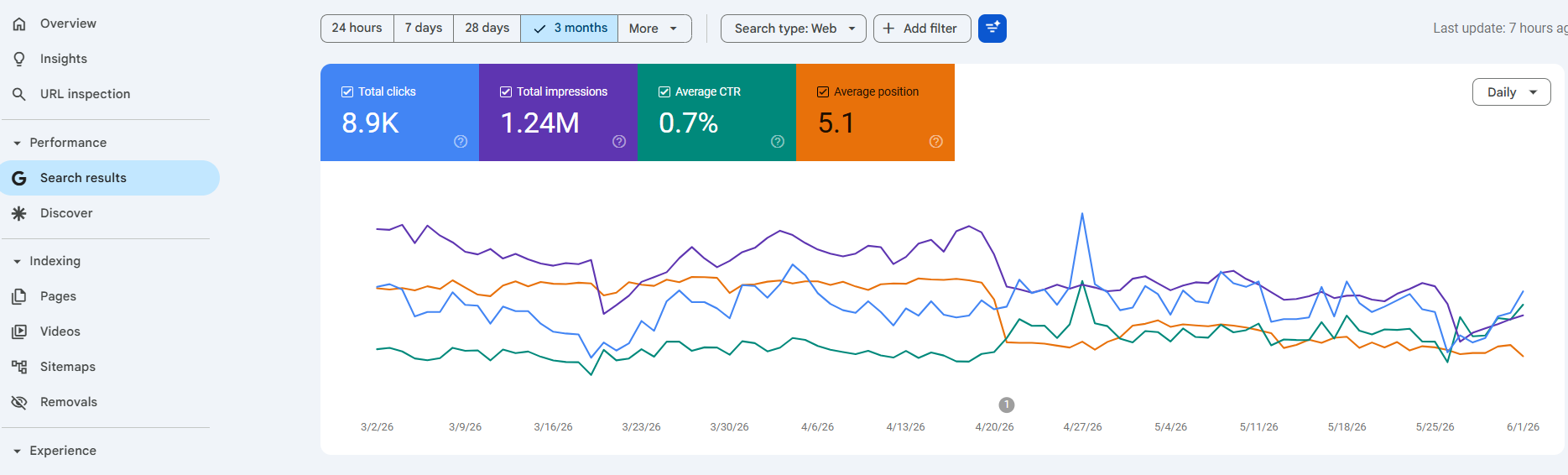
Google Search Console Data: If your site is active, review the search queries where your pages appear in lower positions. These keywords are a goldmine; Google already sees your site as relevant, and you only need some On-Page SEO tweaks to rank higher.
Social Listening: Monitor active communities on X (formerly Twitter) and TikTok in Saudi Arabia. The terms and questions circulating there today are the exact keywords users will search for on Google tomorrow.
Section 2: Technical SEO - The Solid Foundation
Quick Summary: Technical SEO is the process of optimizing your website's software infrastructure to help search engine crawlers effectively access and index your pages. Without a solid technical foundation featuring lightning-fast response times and clean code architecture, no content or marketing campaign will yield tangible Google rankings, especially for enterprise sites and e-commerce platforms.
1. Site Architecture and Crawl Budget Optimization
For large websites and e-commerce platforms, Google has a limited timeframe and specific resources allocated to crawl your site, known as the crawl budget. If your site architecture is complex or riddled with broken links, the Googlebot will abandon the crawl before indexing your most critical products or services.
Flat Site Architecture: No product or article should be more than three clicks away from the homepage. This facilitates the flow of link equity, distributing ranking power evenly across all pages.
Faceted Navigation Management: In e-commerce, extensive filtering options (like color and size) programmatically generate thousands of duplicate URLs. You must implement Canonical tags pointing to the primary product version and disallow crawling of non-essential filter parameters via the Robots.txt file to preserve your crawl budget.
2. Bilingual SEO: Mastering Hreflang Tags for the Saudi Market
Targeting the audience in Saudi Arabia frequently requires offering dual language versions (Arabic and English) to serve both citizens and expatriates. Mishandling multilingual setups can destroy your site's rankings and trigger duplicate content penalties.
Precise Tag Implementation: Hreflang tags must be injected into the Head section of every page to indicate alternative language versions. Crucially, use the correct geographical codes: "ar-SA" for the Arabic version targeting Saudi Arabia, and "en-SA" for the English equivalent in the same region.
Avoid Forced Redirects: Never force a visitor or search engine to redirect to a specific language version based solely on their IP address. This practice actively blocks Googlebot (which mostly crawls from US IPs) from ever discovering and indexing your Arabic content. Let the user choose.
3. Site Performance and Core Web Vitals in 2026
Website speed is no longer just a "nice-to-have" feature; it is a definitive, foundational ranking factor in Google's algorithms. The Saudi user expects a page to load in under two seconds, and any latency leads to catastrophic bounce rates.
Largest Contentful Paint (LCP): Must not exceed 2.5 seconds. To achieve this, defer third-party scripts, utilize modern image formats like WebP, and enforce aggressive server-side caching.
Interaction to Next Paint (INP): The latest metric tracking the responsiveness of interactive elements like buttons and menus. Optimizing INP requires minimizing long JavaScript execution tasks to guarantee instantaneous feedback to user interactions.
4. JavaScript SEO (SPA) and Preventing Rendering Failures
As companies pivot towards building lightning-fast platforms using frameworks like Next.js, React, and Astro, a profound issue emerges regarding Google's ability to read dynamically generated content.
Server-Side Rendering (SSR) and Static Site Generation (SSG): Relying entirely on Client-Side Rendering (CSR) effectively hides your site's content from search engines. You must serve fully rendered HTML pages to crawlers utilizing SSR for dynamic product pages, or SSG for static articles and service pages.
Dynamic Rendering Strategies: If your system architecture is highly complex, deploy dynamic rendering tools to detect search engine bots and serve them a pre-rendered, flat HTML snapshot, while human users receive the fully interactive JavaScript application.

Section 3: On-Page SEO & Content Engineering
Quick Summary: On-page SEO is no longer about stuffing keywords into text. In the AI era, Google's algorithms demand precise "Content Engineering" based on Semantic SEO, establishing Topical Authority, and providing unique Information Gain that competitors lack. This content must be wrapped in advanced structured data to be parsed as a highly authoritative database.
1. Content Engineering and Escaping the Copycat Trap
Today, Google possesses an unparalleled ability to detect spun content and randomly AI-generated text that offers nothing new. To rank, you must fiercely apply the principle of "Information Gain."
The Information Gain Concept: When Google reads your article, it must find proprietary data, original case studies, or expert insights that do not exist in any of the top 10 results. If your article is merely an aggregation of competitors' information, Google will never grant you a top ranking.
Engineering Text Readability (UX/UI): Search engines measure content quality through user interaction metrics. Long texts must be broken down into short paragraphs (no more than three lines), utilizing bullet points, and structuring subheadings (H2, H3) to directly answer user queries, significantly increasing your chances of capturing Featured Snippets.
2. Semantic SEO and the Era of Entities
The era of relying on Latent Semantic Indexing (LSI) in its traditional form is dead. Google now utilizes the Knowledge Graph to understand the world as "Entities" (people, places, concepts) rather than just strings of text.
Writing for Entities (Things, Not Strings): If you are writing an article about "E-commerce in Saudi Arabia," Google's Natural Language Processing (NLP) expects to find semantically related entities within the text, such as (Salla platform, payment gateways, Aramex, Value Added Tax, Ministry of Commerce). The absence of these interconnected entities signals to the engine that your content is superficial.
Topical Depth: Ensure you cover the topic from every conceivable angle to fill any knowledge gaps the user might be searching for, establishing your page as the ultimate destination for that query.
3. Establishing Topical Authority via Content Clusters
You will never rank for highly competitive terms like "SEO Company in Riyadh" simply by creating a single service page, regardless of your backlink profile's strength. Google heavily favors awarding top positions to sites that prove they are an "encyclopedia" in their niche.
The Pillar and Cluster Model: Create a comprehensive, long-form Pillar Page that covers a broad topic generally. Subsequently, publish dozens of sub-articles (Clusters) that delve deeply into every specific micro-topic.
Strategic Internal Linking: All cluster articles must pass PageRank via direct internal links back to the main Pillar Page, and vice versa. This organized, siloed linking structure sends a definitive signal to Google that your website is the primary, most comprehensive authority on this subject.
4. Advanced Schema Markup (Structuring the Invisible Web)
Implementing basic Schema markup through standard SEO plugins is no longer sufficient for serious competition. To dominate the SERPs and capture Rich Results, you must deploy advanced, nested JSON-LD code.
Programmatically Linking Entities: Do not add an (Article) schema separate from an (Organization) or (Author) schema. The code must be nested to explicitly tell Google: "This (Article) was authored by this specific expert (Person), who operates under this trusted entity (Organization)."
Exploiting FAQ Schema: Programmatically integrate FAQ schemas into your service and product pages. This guarantees your answers appear directly in the search results real estate before the user even clicks your link, massively boosting brand visibility and Click-Through Rates (CTR).
Section 4: E-commerce SEO in Saudi Arabia (Salla & Zid Platforms)
Quick Summary: E-commerce SEO fundamentally differs from service-based websites. Software as a Service (SaaS) platforms like Salla and Zid offer rapid deployment solutions, but impose technical constraints on SEO architecture. Success here requires bridging the gap between these limitations and Google's stringent requirements by optimizing category pages, resolving duplicate faceted URLs, and intelligently managing out-of-stock inventory to preserve crawl budget.
1. Overcoming the Technical Limitations of SaaS Commerce Platforms
Cloud-based e-commerce platforms are engineered for rapid sales, not necessarily to meet the complex technical SEO standards we discussed in Section Two. As a specialist, you must intervene programmatically or utilize advanced platform settings to rectify these bottlenecks.
Controlling Faceted Navigation: As mentioned in the site architecture discussion, users filtering products by "Red Color" or "Small Size" endlessly generate new URLs. You must ensure Canonical tags are active on these filtered links, pointing back to the main category page. This prevents Google from indexing thousands of duplicate pages that needlessly drain your Crawl Budget.
URL Structure Optimization: Some platforms generate convoluted, random product URLs. Always customize the slug to be concise, exclusively in English (to avoid Arabic URL encoding issues in browsers), and directly reflective of the product's primary keyword, devoid of overly complex folder paths.
2. Engineering Category Pages as Search Assets
Category pages (e.g., Men's Fragrances) are the most critical assets in any online store. They are the pages destined to rank for high-volume commercial keywords, not the individual product pages. The prevailing issue is that most stores merely display a grid of images and prices.
Injecting Semantic Entities into Categories: Building upon our Semantic SEO principles, a category page must not be textually barren. Add an information-rich paragraph above or below the product grid. This text must encompass entities relevant to the category (e.g., perfume brands, fragrance notes, parfum concentration). This provides Google with the necessary context to categorize the page as an authoritative hub.
Internal Linking to Best-Sellers: Utilize the category page to channel Link Equity to your most profitable products. Products positioned in the top row of a category grid absorb the highest proportion of crawling prioritization and page authority.
3. Strategic Management of Out-of-Stock Inventory
The most catastrophic mistake store owners in Saudi Arabia make is deleting a product page (yielding a 404 error) the moment inventory depletes. This action instantly obliterates all historical backlinks, authority, and organic traffic that specific URL has accrued.
Temporarily Out-of-Stock Products: Keep the page live and status unaltered, but clearly mark the product as "Out of Stock," incorporating a "Notify Me When Available" feature to capture lead data. Crucially, render a "Related Products" widget immediately below the fold to retain the user within the purchasing funnel.
Permanently Discontinued or Seasonal Products: If a product is never returning, do not delete it outright. Execute a permanent 301 Redirect from this product's URL to the closest available alternative, or to its parent category page. This ensures the historical link equity of the defunct URL flows into the active, revenue-generating pages of your store.
4. Commercial Structured Data (E-commerce Schema)
To maximize Click-Through Rates (CTR) directly from the Search Engine Results Pages (SERPs), you must aggressively exploit Product Rich Snippets.
Deploying Product and Offer Tags: Verify that your product page's JSON-LD markup accurately broadcast the current price and stock availability (InStock / OutOfStock) to the crawler. Google algorithms heavily prioritize displaying products that instantly reveal pricing and availability to the Saudi searcher.
Review Schema (Aggregate Rating): The golden stars displayed beneath your URL in Google results exponentially increase click-through rates. Programmatically integrating genuine customer aggregate ratings into your schema markup is the most rapid tactic to siphon organic traffic away from higher-ranking competitors.

Section 5: Local SEO - Dominating Your City Before the World
The Golden Rule: If you operate a service-based business or have physical branches in Saudi Arabia, attempting to rank for broad, global search terms before dominating your local geographical radius is a complete waste of your budget. Local SEO is the shortest path to capturing a user with immediate purchasing intent who is looking for an accessible service provider.
1. Google Business Profile (GBP): Your Digital Storefront
Let me share a professional secret: Google does not treat your Business Profile merely as a map pin or an address directory. It treats it as a micro-search engine and an interactive alternative to your actual website.
The Professional Secret: Local search algorithms are driven by three primary pillars: Relevance, Distance, and Prominence. You cannot artificially alter the distance to the user, but you can strategically manipulate relevance and prominence.
The Common Trap for Beginners: Creating the profile, entering the company name, leaving the description blank (or writing a boring historical bio), and then completely abandoning the listing for months.
The Expert Tactic (How to Dominate the Local Pack):
Strategic Keyword Injection: Write a comprehensive 750-character description, ensuring your most critical services and targeted city are front-loaded in the first 250 characters.
Exploiting the Services/Products Tab: Never just list the names of your services. Build micro-pages within the GBP interface for every single service. Include a detailed description rich in semantic keywords and a direct Call to Action (CTA) link funneling users to the corresponding landing page on your site.
Consistent Google Posts: Treat your GBP like a social media feed. Publishing a weekly update (a special offer, a new blog post, or a photo of a completed project) sends continuous activity signals to Google's crawlers, elevating your ranking above dormant competitors.
2. Local Citations and the Strict NAP Consistency Rule
For Google to trust that your company is a legitimate, authoritative entity in Riyadh, it cross-references mentions of your business across local business directories and trusted Saudi websites. This is where the NAP (Name, Address, Phone Number) concept becomes critical.
The Common Trap for Beginners: Writing the company's details differently across various platforms. (e.g., "Horizon Company" on one directory, and "Horizon Trading Est." on another, utilizing different phone numbers).
The Expert Tactic (Unifying the Digital Entity):
The strict consistency rule mandates that your NAP data must be an exact, literal match (Copy & Paste) on your website, your GBP, and every single Saudi business directory you register with. Even the slightest discrepancy causes Google's Knowledge Graph to doubt the entity's credibility, severely diluting the power of your local signals.
3. Review Engineering as a Core Ranking Factor
Positive reviews are not just cosmetic trust signals for potential clients; they are direct algorithmic Ranking Factors that local search engines parse to analyze service quality.
The Common Trap for Beginners: Purchasing fake reviews, or acquiring 5-star ratings that contain no text whatsoever (silent ratings).
The Expert Tactic (SEO-Optimized Responses):
Instruct your satisfied clients to write reviews that explicitly mention the service provided (e.g., "The best technical SEO setup service in Riyadh"). Google reads these textual footprints and uses them to rank you for those exact long-tail queries.
When replying to reviews, strictly avoid automated, repetitive templates. Craft a response that intelligently weaves in your geo-targeted keywords. (e.g., "Thank you, Ahmed. We are always thrilled to provide top-tier digital marketing services to our clients here at our Riyadh branch.").
Section 6: Off-Page SEO & Link Building - The Art of Acquiring Digital Authority
The Golden Rule: In 2026, backlinks are no longer a vote of quantity; they are an endorsement of trust. A single link from an authoritative, topically relevant Saudi domain programmatically and commercially outweighs thousands of random, low-tier links. Google's engine no longer merely counts links; it weighs them.
1. The Illusion of Cheap Links and the PBN Suicide
Let us be completely transparent: the Arabic SEO market is saturated with deceptive offers promising thousands of links for pennies. This is not an investment; it is premeditated self-destruction for your website.
The Professional Secret: Google's SpamBrain algorithm now relies on advanced AI to neutralize and ignore unnatural links in real-time. Google rarely even bothers to penalize you manually anymore; it simply depreciates the value of these links to absolute zero, leaving you having burned your budget on thin air.
The Common Trap for Beginners: Purchasing link packages from random forums, or utilizing low-quality Private Blog Networks (PBNs) that share the same IP footprints, combined with an obsessive use of Exact Match Anchor Text for every single link.
The Expert Tactic (Link Velocity & Relevance):
An expert prioritizes Topical Relevance above all. If you sell medical equipment, a link from a random tech blog holds zero weight. Seek endorsements from medical journals or hospital directories.
Maintain a natural Anchor Text profile. Utilize your brand name, naked URLs, and generic phrases for 70% of your links. Reserve explicit, money-keyword anchor texts for the remaining 30% to avoid triggering algorithmic red flags.
2. Digital PR: The Ultimate Secret Weapon of Enterprise Entities
How do major news portals and enterprise corporations acquire powerful links without paying directly for placements? The answer is Digital PR. It is the art of compelling others to organically reference your brand.
The Common Trap for Beginners: Sending thousands of spammy outreach emails begging webmasters for a free link, or engaging in blatant reciprocal link exchanges—a pattern easily detected and devalued by Google.
The Expert Tactic (Engineering Linkable Assets):
Do not beg for links; engineer content that is impossible to ignore. Conduct an original case study on the Saudi market, build a free utility tool (like an ROI calculator or an interactive roadmap), or publish statistics derived from your proprietary client data.
Package this data into a professional press release and pitch it to journalists and bloggers in major Saudi publications. Journalists are in perpetual need of reliable data to substantiate their articles. By providing it, you earn a highly authoritative, organic editorial link (High DR) that money simply cannot buy.
3. Harnessing Unlinked Brand Mentions
In modern SEO, building authority is not strictly confined to clickable "dofollow" links. Google now treats the mere textual mention of your brand name on authoritative domains as a formidable ranking signal.
The Common Trap for Beginners: Completely ignoring brand mentions across the web if they are not accompanied by a direct hyperlink, treating them as wasted effort.
The Expert Tactic (Exploiting Entity Authority):
Utilize monitoring tools (like Google Alerts) to track mentions of your company name or your personal expert identity across news outlets, forums, and blogs.
When Google's NLP reads your name contextually associated with terms like "SEO Expert in Saudi Arabia" across multiple independent platforms, it solidifies your Semantic Entity. You can also execute a polite outreach campaign, asking these webmasters to convert the unlinked mention into an active hyperlink—a request with a very high success rate since they have already validated your brand.
Section 7: Generative Engine Optimization (GEO) - The New Rules of Engagement
The Golden Rule: In 2026, traditional blue-link clicks are plummeting in favor of zero-click AI Overviews prominently displayed at the top of the SERPs. If your content is not programmatically structured to be cited by Large Language Models (LLMs) like Google Gemini and ChatGPT, your website will be rendered functionally invisible to users.
1. Information Density and Answer Engineering
AI models do not parse your content to appreciate literary flair; they ruthlessly scan the DOM for hard facts, statistics, and high-density direct answers to serve to the user instantaneously.
The Common Trap for Beginners: Burying the actual answer beneath walls of introductory fluff, operating under the outdated assumption that delaying the answer artificially inflates the "Time on Page" metric.
The Expert Tactic (The Inverted Pyramid):
Front-load the value. Deploy a "Quick Summary" or "TL;DR" block immediately beneath every H2 tag, exactly as we have modeled throughout this roadmap.
Engineer these answers to be definitive, concise (strictly between 45 to 50 words), and rich in semantic entities. LLMs inherently favor and extract these pre-packaged text chunks to construct their generative responses.
2. First-Hand Experience (E-E-A-T) as Your Only Moat
Because AI can autonomously generate generic informational content in seconds, the singular remaining competitive moat for human creators is "Experience"—the newest 'E' added to Google's Quality Rater Guidelines. Search engines now aggressively prioritize content demonstrating lived experiences that machines cannot hallucinate.
The Common Trap for Beginners: Rewriting top-ranking competitor articles using a passive, neutral tone devoid of any proprietary opinion or personal insight. Google's algorithms effortlessly classify this as automated or low-effort content and ignore it.
The Expert Tactic (Injecting Proprietary Data):
Utilize active, authoritative phrasing. State: "Through our internal audit of 50 Salla-based stores, we discovered..." instead of the generic "Studies show that...".
Substantiate your claims with authentic, un-stock imagery: screenshots of analytics dashboards, real-world case studies, and exact numerical data. Proprietary Data forces AI engines to cite your domain as the primary and exclusive source of truth.
3. Algorithmic Formatting for LLMs
How you format your data is equally as critical as the data itself. Language models parse and comprehend structurally organized data exponentially better than monolithic blocks of text.
The Common Trap for Beginners: Publishing massive walls of continuous text without any visual breaks, structural hierarchy, or tabular data.
The Expert Tactic (Formatting for the Machine Eye):
Aggressively utilize HTML Tables for any comparative data. AI engines heavily index tables and frequently scrape them to display directly to the user as a definitive answer.
Rely on unordered (bulleted) and ordered (numbered) lists to answer "How-to" and process-oriented queries. Ensure each bullet point is a complete, context-rich sentence so the algorithm can seamlessly extract and summarize it independently.
Section 8: SEO Measurement & ROI - Speaking the Language of Numbers
The Golden Rule: Search Engine Optimization is not a vanity contest to hoard meaningless traffic; it is a capital investment that must generate returns far exceeding its cost. Ranking on page one is merely a "Vanity Metric" if it fails to tangibly directly scale your bottom-line revenue.
1. The Trap of Vanity Metrics vs. True Profitability (POAS)
In the real business world, nobody pays employee salaries with Google "Impressions."
The Common Trap for Beginners: Celebrating rankings for keywords with million-plus search volumes, or being mesmerized by a 200% traffic spike, only to discover at the end of the fiscal quarter that organic sales have flatlined because the traffic was driven by the wrong search intent.
The Expert Tactic (Tying SEO to the Bottom Line):
An expert does not track clicks; they track conversions. Utilize Google Analytics 4 to build precise funnels that measure the exact financial value of every visitor originating from organic search.
As we detailed in our comprehensive guide on (Why ROAS is Lying to You and the Shift to POAS), this exact profit-driven mentality must be applied to SEO. Measure your Organic Customer Acquisition Cost (CAC) against the Customer Lifetime Value (LTV).
2. When is it Time to Hire a Technical SEO Consultant?
You can delegate good content creation to a professional copywriter, but your website's software infrastructure requires precise engineering intervention. If you operate an enterprise platform or a store with thousands of SKUs, a single programmatic error can cost you your entire site's indexation.
Technical intervention becomes absolutely mandatory in these scenarios:
Foundation or Migration Phases: Prior to launching your platform or during a site migration, ensuring zero loss of historical link equity and authority.
Sudden Traffic Collapse: If your rankings plummet overnight following a Google Core Update, you do not need new blog posts; you need a forensic Technical Audit to identify and resolve algorithmic penalties.
JavaScript and Performance Bottlenecks: If your site is built on modern SPA frameworks and Googlebot struggles to render your content, this is precisely where an SEO Engineer steps in.
3. Your Next Move: Turning the Roadmap into Reality
You have just consumed the most updated, highly detailed 2026 SEO roadmap tailored for the Saudi market. Knowledge alone does not rank websites; flawless execution is what dictates market dominance.
If you are ready to stop burning your marketing budget on ephemeral paid ads and start building a digital asset that captures customers organically for years to come, the time to act is now.
Book Your Technical Consultation Today: Do not leave your project's success to chance or amateur experimentation. Contact us today for a Comprehensive SEO Audit, and let us begin engineering your digital growth in the Saudi market.